Skip to main content Skip to search Skip to main navigation

How do I set up an ESD workstation?

Equipment, Grounding, and Important Standards

An ESD workstation protects sensitive electronic components and assemblies from damage caused by electrostatic discharge (ESD). For this protection to function reliably, the work surface, grounding, personal equipment, and other ESD protective measures must be coordinated.

But how do you set up an ESD workstation correctly? What equipment is needed, what should be considered regarding grounding, and what requirements does the DIN EN 61340-5-1 specify?

In this guide, you’ll learn step by step how to set up an ESD workstation, which components are essential for safe and standards-compliant ESD protection, and how to avoid common mistakes.& nbsp;

You’ll also receive practical tips on selecting suitable ESD workbenches, desk mats, grounding systems, and other ESD equipment.

Key Points at a Glance

Setting Up an ESD Workstation Correctly — Step by Step

Step 1:
Assessment - Identifying Requirements for an ESD Workstation

Before setting up an ESD workstation, you should first analyze the existing conditions and the requirements for the future workstation. A thorough assessment forms the basis for selecting the appropriate ESD equipment and helps prevent unnecessary purchases as well as potential weaknesses in ESD protection at an early stage.& nbsp;

First, check what activities are performed at the workstation and which electrostatic-sensitive components or assemblies are used in the process. The physical conditions, available work surfaces, floor coverings, and grounding options should also be taken into account. 

The following questions will help you plan your ESD workstation:

  • Work area: Where is the ESD workstation to be set up, and how much space is available?
  • Activities: Are electronic components being assembled, tested, repaired or packaged?
  • ESD sensitivity: Which components and assemblies are being handled, and what protection requirements do these entail?
  • Existing equipment: Are suitable workbenches, ESD floor coverings or earthing systems already in place?
  • Personal earthing: Do staff mainly work whilst sitting, standing, or do they regularly change their location?
  • Working environment: Are there any materials or work equipment that could promote the build-up of electrostatic charges?
  • Standard requirements: Which requirements of the company’s ESD control programme and DIN EN IEC 61340-5-1 must be taken into account?

Why is a needs assessment important?

Not every ESD workstation requires the same equipment. Whilst, for example, a suitable work surface with a wrist strap earth connection can be used at a fixed assembly station, mobile tasks may require additional measures such as a coordinated system of ESD footwear and ESD flooring.

Tip: Document the results of your assessment and use them to draw up a list of the required ESD components. This will provide a sound basis for the subsequent selection and set-up of your ESD workstation.

Step 2:
Product Selection -
What equipment does an ESD workstation need?


Back to top ⬆️

A professionally set up ESD workstation consists of several coordinated components that protect sensitive electronic components and assemblies from electrostatic discharge. Which ESD equipment is actually required depends on the work processes, the components used, and the requirements of the company’s ESD control program.

The most important components of an ESD workstation include:


ESD workbench and ESD table mat

A suitable  ESD workbench forms the basis for a protected workplace. The work surface must meet the specified ESD requirements and be properly integrated into the earthing system. Alternatively, or in addition, suitable ESD table mats can be used.

ESD earthing and personal earthing

To prevent electrostatic charges from building up uncontrollably, suitable earthing measures must be put in place. These include, for example, earthing connections, ESD wrist straps as well as – depending on the workplace layout – ESD footwear in combination with a suitable ESD floor.

ESD work chair

A  ESD work chair is an important addition to workplace design for sedentary work. It must be suitable for its intended use in terms of its electrostatic properties. At the same time, it should enable ergonomic working.

ESD flooring

A suitable  ESD floor can form part of the personal earthing system. Particularly at workstations where staff move around regularly, the interaction between the floor covering and  ESD footwear plays an important role.

ESD tools and accessories

Also  tools, trays, containers and packaging materials must be selected according to their intended use. Unsuitable materials may generate electrostatic charges or impair the effectiveness of existing protective measures.

ESD test and measurement equipment

With suitable  test equipment  can be used to regularly check important safety measures. These include, for example, wrist strap testers, Shoe sole tester and resistance meters.

ESD tables and worktops

More EESD tables and worktops

ESD chairs, stools and standing aids

More ESD chairs, stools and standing aids

ESD flooring and flooring systems

More ESD flooring and flooring systems
ESD-PROTECT MultiGround Monitor – Permanente Erdungsüberwachung von Arbeitsoberfläche und Handgelenkband nach IEC 61340-5-1 & ANSI/ESD S20.20

Earthing and earthing monitoring

More about MultiGround Monitor

Step 3:
Earthing – Earthing an ESD workstation correctly

Back to top ⬆️

The correct earthing of an ESD workstation is one of the most important prerequisites for the effective protection of sensitive electronic components. The aim is to prevent dangerous electrostatic potential differences and to dissipate any existing charges in a controlled manner. 

How is an ESD workstation correctly earthed? 

To achieve this, work surfaces, people and other relevant workstation components must be integrated into a suitable earthing and equipotential bonding system.

1. ESD work surface earthing

ESD workbenches and ESD work mats must be connected to the appropriate earthing system via the connections provided for this purpose. The earthing cables and connections used must be suitable for the specific application.

2. Protecting staff from electrostatic charge

People can build up electrostatic charges through movement and contact with different materials. At seated workstations, ESD wrist straps are frequently used; these ensure controlled potential equalisation via a suitable earthing connection.

For standing or mobile tasks, a certified personal earthing system comprising suitable ESD footwear and an ESD floor may be used.

3. Use suitable earthing connections

ESD earthing modules and earthing connection points enable the connection of various ESD protection components. In doing so, the specified connections and the requirements of the earthing concept must be taken into account.

4. Check earthing connections regularly

An existing earthing cable alone does not guarantee effective ESD protection. Damaged cables, loose connectors or unsuitable materials can impair its function. Regular checks are therefore necessary.

What mistakes should be avoided with ESD earthing?

Common problems arise from unconnected desk mats, damaged wrist straps, unsuitable earthing points or a lack of functional checks.

It is also important that ESD earthing measures are carried out professionally. Work on protective earthing and electrical installations must be carried out by suitably qualified electricians.

Tip: With suitable ESD earthing modules, earthing cables and  earthing monitoring systems  enable workplace earthing to be set up and monitored as required.

Earthing and earthing monitoring in a single unit

Grounding with the MultiGround Monitor

The new MultiGround Monitor from ESD-PROTECT combines two essential functions in a single device: Not only does it enable personal earthing via the wrist strap, but it also continuously and reliably monitors the permanent earthing of the person and the work surface through precise control measurements.

Converting an existing ESD workstation – is that possible?

Yes, provided the minimum requirements identified in the assessment are met:

With small steps and simple measures, a single workstation can be quickly converted into an ESD workstation. The requirements for the workstation are crucial.

It is important to carry out regular checks of electrical conductivity using suitable measuring instruments.

Step 4:
Signage – Clearly mark the ESD area


Back to top⬆️

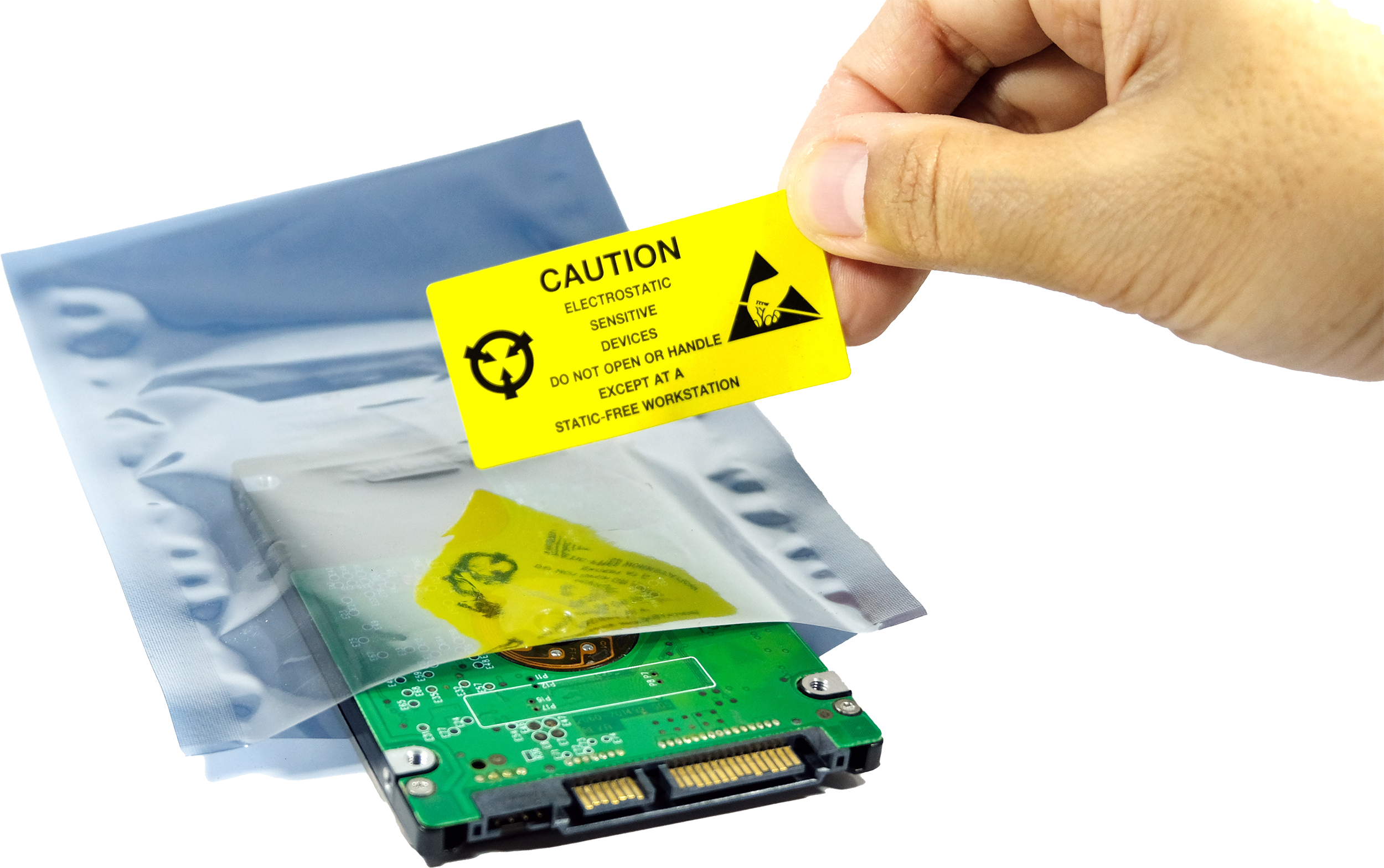
An important part of setting up an ESD workstation is the clear marking of the electrostatic-protected area (EPA – Electrostatic Protected Area). This makes it clear to staff, visitors and external service providers where specific ESD protection measures apply and which rules of conduct must be observed. 

How should an ESD workstation be correctly labelled?

Kennzeichnen Sie die Zugänge und Grenzen des ESD-Schutzbereichs mit geeigneten ESD-Warnzeichen und Hinweisschildern. Die Markierungen sollten gut sichtbar, verständlich und dauerhaft angebracht sein. Je nach Aufbau und Größe der EPA können zusätzliche Bodenmarkierungen helfen, den geschützten Bereich klar abzugrenzen.

Am Arbeitsplatz selbst können ergänzende Hinweise auf die erforderlichen Schutzmaßnahmen aufmerksam machen, beispielsweise auf die vorgeschriebene Personenerdung, das Tragen geeigneter ESD-Schutzkleidung oder den Umgang mit elektrostatisch empfindlichen Bauteilen. (siehe EPA-Checkliste)

Bei der Kennzeichnung sollten Sie insbesondere auf folgende Punkte achten:

  • EPA-Zugänge markieren: Machen Sie deutlich, wo der elektrostatisch geschützte Bereich beginnt.
  • ESD-Warnschilder anbringen: Verwenden Sie gut erkennbare Kennzeichnungen mit dem ESD-Warnsymbol.
  • Verhaltensregeln kommunizieren: Informieren Sie über die Schutzmaßnahmen, die vor dem Betreten und während der Arbeit einzuhalten sind.
  • Arbeitsplätze und Ablagen kennzeichnen: Kennzeichnen Sie relevante Arbeitsbereiche, Behälter oder Ablageflächen, wenn dies zur eindeutigen Zuordnung und sicheren Handhabung beiträgt.
  • Kennzeichnungen regelmäßig kontrollieren: Achten Sie darauf, dass Schilder lesbar, Markierungen sichtbar und Informationen aktuell bleiben.

Warum ist eine eindeutige ESD-Kennzeichnung wichtig?

Eine klare Kennzeichnung unterstützt die Einhaltung des betrieblichen ESD-Schutzkonzepts und hilft, unbeabsichtigte Verstöße gegen festgelegte Schutzmaßnahmen zu vermeiden. Besonders in Produktions- und Montagebereichen mit wechselnden Mitarbeitern oder Besuchern schafft sie Orientierung und erhöht das Bewusstsein für mögliche elektrostatische Risiken.

Wichtig ist, dass die Kennzeichnung durch geeignete technische und organisatorische Schutzmaßnahmen ergänzt wird. Ein Warnschild allein schützt keine empfindlichen elektronischen Bauteile.

Tipp: Prüfen Sie bereits bei der Planung Ihres ESD-Arbeitsplatzes, wo Schilder, Warnzeichen und gegebenenfalls Bodenmarkierungen sinnvoll angebracht werden können. Passende ESD-Kennzeichnungen helfen dabei, den Schutzbereich im Arbeitsalltag klar erkennbar zu machen.

Step 5:
Inspection – Check, inspect and document the ESD workstation

Back to top ⬆️

A properly set up ESD workstation must be checked regularly to ensure that the intended protective measures remain effective in the long term. This is because even high-quality ESD products can have their protective function compromised by wear and tear, dirt, damage or faulty connections.& nbsp;

Regular ESD testing is therefore an important part of the company’s ESD control programme. 

What needs to be checked at an ESD workstation?

1. ESD work surfaces and desk mats

Suitable resistance meters can be used to check whether work surfaces and desk mats meet the specified electrical requirements. The prescribed measurement procedures and limit values must be observed.

2. ESD earthing connections

Earthing cables, connection points and earthing systems should be checked regularly for damage and to ensure they are functioning correctly. A faulty connection can impair the intended equipotential bonding.

3. ESD wrist straps

Wrist straps and their connecting cables are subject to mechanical stress. The function of the personal earthing system can be checked using suitable test equipment.

4. ESD footwear and ESD flooring

When providing personal earthing via footwear and flooring, the interaction between the components must be taken into account. Appropriate tests help to assess the effectiveness of the system.

5. Other ESD protective equipment

Depending on the workplace, additional checks may be required, for example for ESD chairs, clothing, tools, packaging or ionisation devices.

How often should an ESD workstation be tested?

The required test intervals depend on the protective measures in place, the working conditions and the organisation’s ESD control programme.

Frequently used personal earthing systems, for example, can be checked before work begins. Other components are checked in accordance with the documented test intervals.

It is important that the tests are carried out in accordance with suitable procedures and documented in a traceable manner.

Why is it important to document ESD tests?

Documentation enables measurement results, deviations and corrective actions taken to be traced. It supports quality assurance and helps to identify changes to ESD protective equipment at an early stage.

Tip: Use suitable ESD test equipment and establish clear test procedures for your workstations. This will enable you to systematically monitor the effectiveness of your ESD protective measures. This proves particularly helpful when it comes to documenting and managing ESD measurements is the INVENTIX ESD management software. 

The 10 most common mistakes at ESD workstations

Comprehensive ESD protection is often still underestimated and leads to breaks in the earthing chain caused by: 

  1. standard office chairs in the ESD area 
  2. lack of earthing for equipment
  3. loosely worn earthing wrist straps
  4. incorrect or soiled footwear 
  5. unsuitable cleaning products 
  6. damaged desk mats or earthing cables
  7. lack of monitoring measurements and personal testing, uncalibrated test equipment
  8. non-conductive ESD tools
  9. insulating objects on the work surface
  10. lack of specialist knowledge

Back to top ⬆️

Are you looking to set up or modernise an ESD workstation? 

Whether it’s a single assembly station, an existing workstation or a complete ESD protection zone: we can assist you with the planning and selection of suitable ESD workstation equipment.& nbsp;

From ESD workbenches and earthing systems right through to appropriate protective measures, ESD-PROTECT offers bespoke solutions tailored to your requirements. 

Let our ESD specialists advise you and work with us to plan your ESD workstation.

The benefits of our ESD consultancy

  • In-person on-site: We assess your actual working conditions directly at your premises.

  • Tailored to your needs: You’ll receive recommendations tailored to your requirements.

  • Holistic approach: We take into account the interplay between work surfaces, earthing, personal protection and ESD equipment.

  • Practical implementation: Our solutions are tailored to your operational processes.

  • Everything from a single source: Consultancy, planning and suitable ESD products from ESD-PROTECT.

EP5002022-Plakat-EPA-Checkliste-A4_2024-web

Stay on the safe side with the EPA checklist

Available in German only.

Download
Your EPA Checklist (German)
pdf 0.81 MB

FAQ´s

This varies greatly depending on the ESD policy in place. To determine this, the following questions, for example, would need to be answered: 

  • Do you work every day or only occasionally at an ESD-protected workstation?
  • Is it always the same person working at the workstation, or is there rotating staff?
  • Which electronic components are being handled?
  • Are there specifications within the supply or production chain?

ESD protection can be implemented on a very small scale for as little as a few hundred euros.

For a small hobby electronics workstation or a mobile phone repair workshop, no extensive industrial ESD equipment is required. The key thing is that sensitive electronic components are protected against electrostatic discharge and that there is a reliable earth connection.& nbsp;The components listed above provide a sensible basic set-up. 

A suitable ESD chair, ESD shoes and a conductive floor become particularly important when working whilst standing or if personal earthing is to be achieved via the shoe-floor system.

The DIN EN IEC 61340-5-1 requires regular testing as part of a documented ESD control programme. The specific test intervals are determined on a case-by-case basis. Whilst ESD wrist straps and ESD footwear are usually tested daily before work begins, measurements of desk mats, floor coverings and earthing connections are carried out at specified regular intervals.

In addition, tests should be carried out following repairs, modifications or if damage is suspected. The results must be documented in order to provide ongoing evidence of the effectiveness of the ESD protective measures.

For testing and documentation, we recommend the use of INVENTIX, a ESD management software that we have developed ourselves based on our experience and customer requirements.