
ESD Coating
 EP1101007-VH
 EP1101014
 EP1101011-VH
Spray Paint or 2-Component Paint – the Right Choice for Your Surface
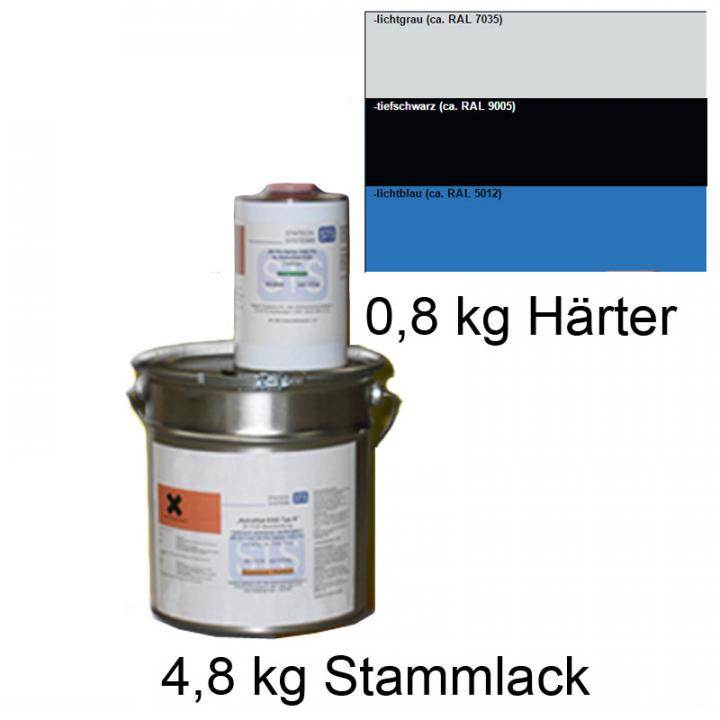
The selection of the appropriate ESD paint depends on the substrate, required resistance properties and processing conditions. The ESD spray paint (400 ml) is suitable as a straightforward solution for smaller surfaces and individual parts – available in five RAL colours, chemical resistant and permanently adhering. For more demanding requirements, the dissipative 2-component PU paint is available: with high abrasion resistance, good chemical resistance and a coverage rate of 12 m²/kg, it is designed for larger surfaces and industrial applications. On plastic substrates such as ABS, PC, PP or PUR, the use of the matching adhesion promoter is recommended to ensure permanent adhesion of the ESD paint.
Processing Notes
ESD paints should be processed under controlled conditions – temperature, humidity and substrate preparation significantly influence adhesion and the resulting dissipation resistance values. After curing, a resistance measurement of the coated surface per DIN EN 61340-5-1 is recommended to document standards-compliant dissipative properties. Suitable measurement devices can be found in the ESD Measurement Devices & Audit Kits section.