
Electric field meter
Measuring electric field strength
The measurement of electric fields or field strengths is one of the most important measurements in ESD measurement technology. Therefore, a field meter should be part of the basic equipment in an ESD-protected area.
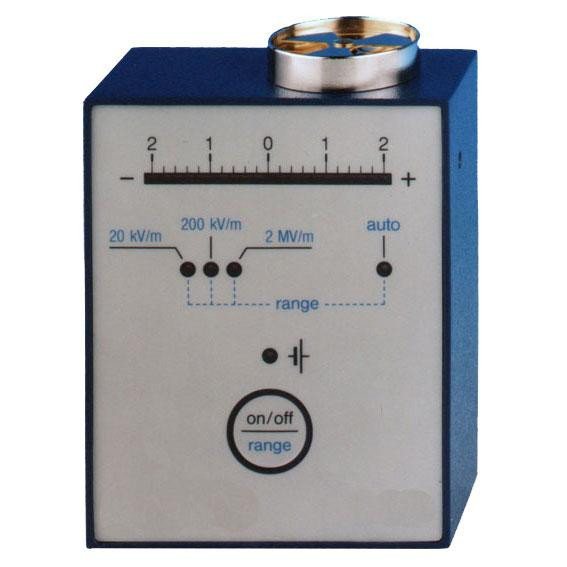
An electric field meter, also known as an electric field meter, rotary voltmeter or
field mill, is a device for measuring electric field strength.
At a defined measuring distance from an object, it can be used as a voltage meter.

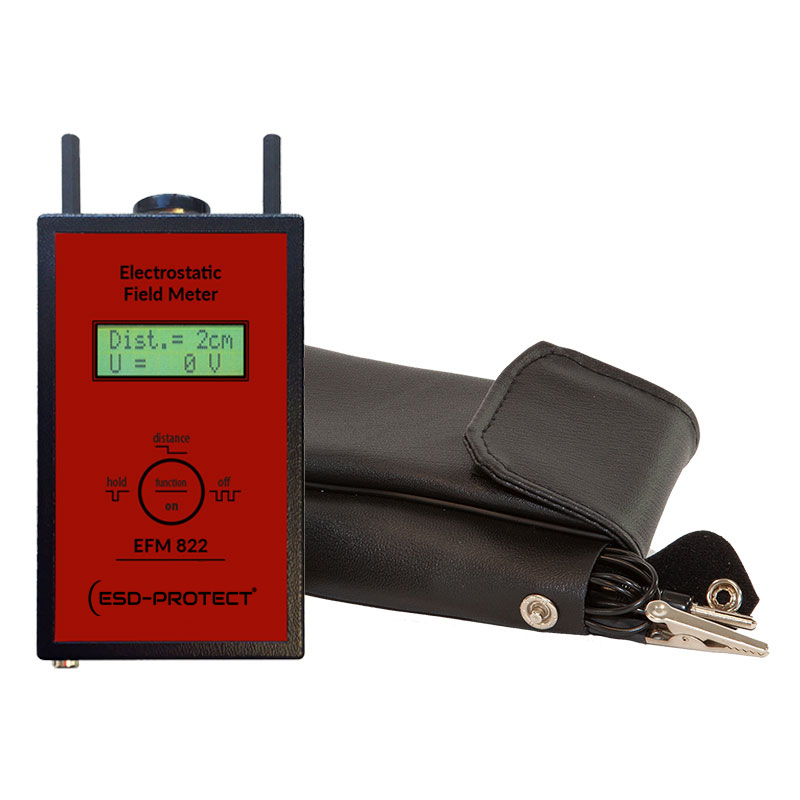 EP0201011
Electric field meter EFM 822
EP0201114
Electric field meter EP-EFM 825 with accessory set ZBS
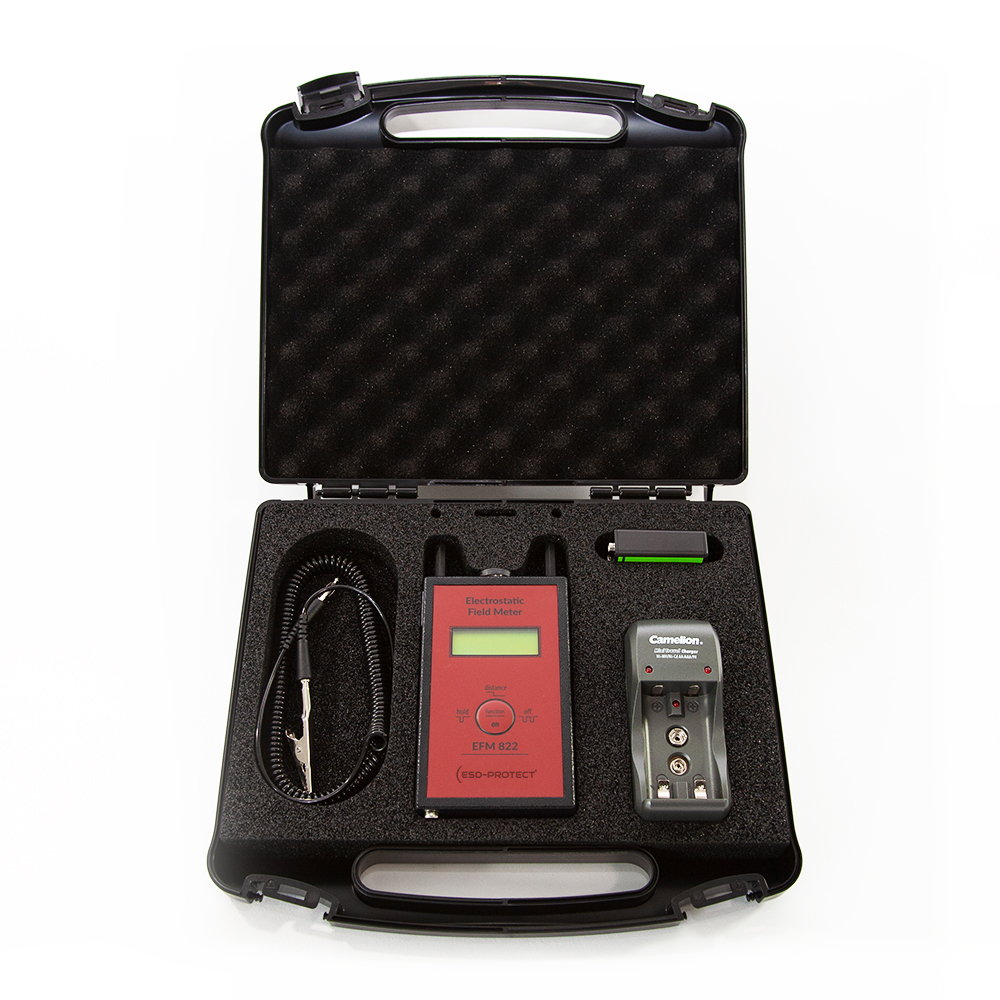 EP0201012
Electric field meter EP-EFM 822 with accessory set ZBS
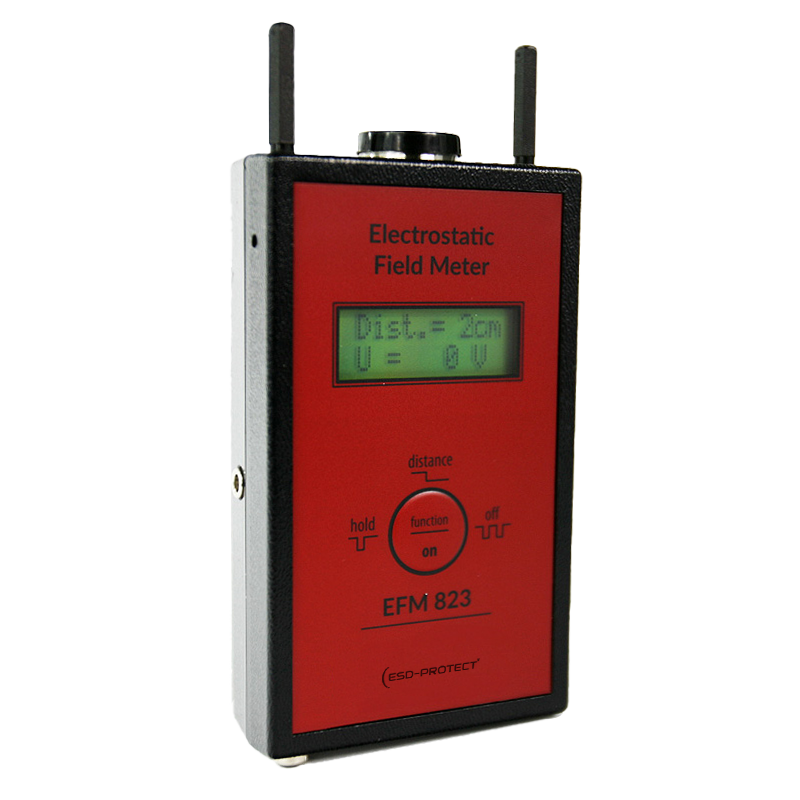 EP0201013
Electric field meter EP-EFM 823 with accessory set ZBS
 EP0201115
Electric field meter EP-EFM 825 with accessory set CPS
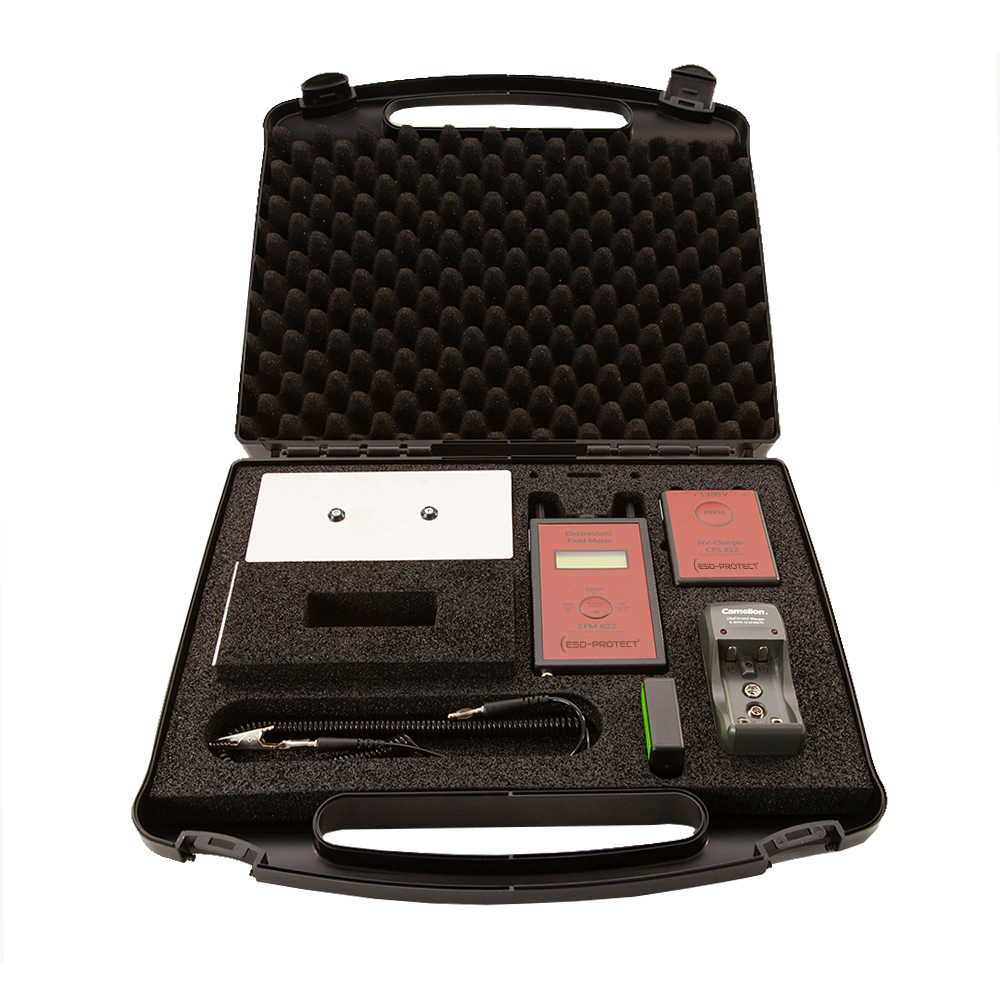 EP0201014
Electric field meter EP-EFM 822 with accessory set CPS
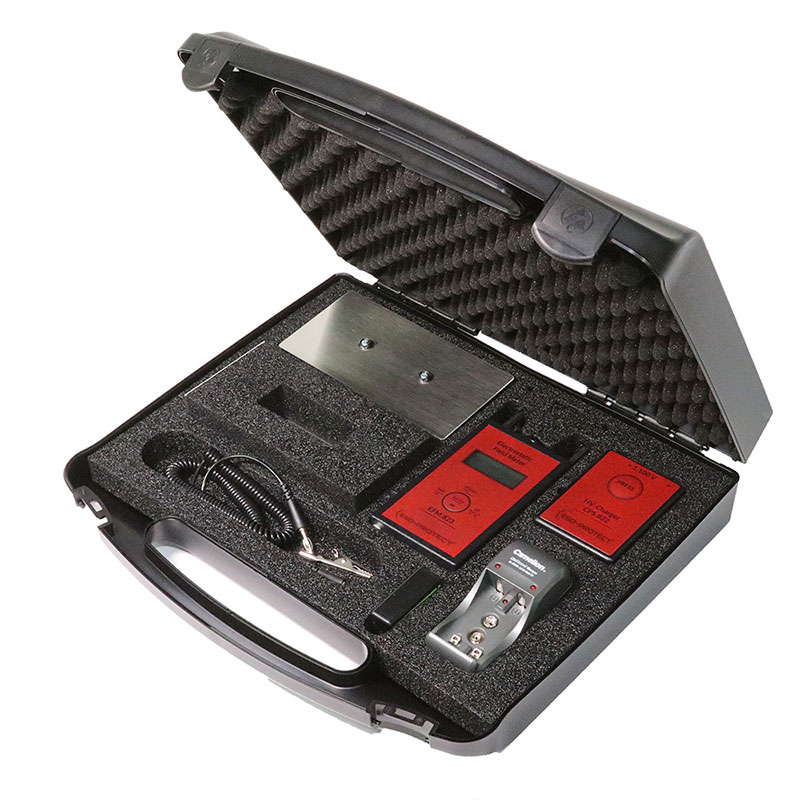 EP0201016
Electric field meter EP-EFM 823 with accessory set CPS
 EP0201116
Electric field meter EP-EFM 825 with accessory set BGT
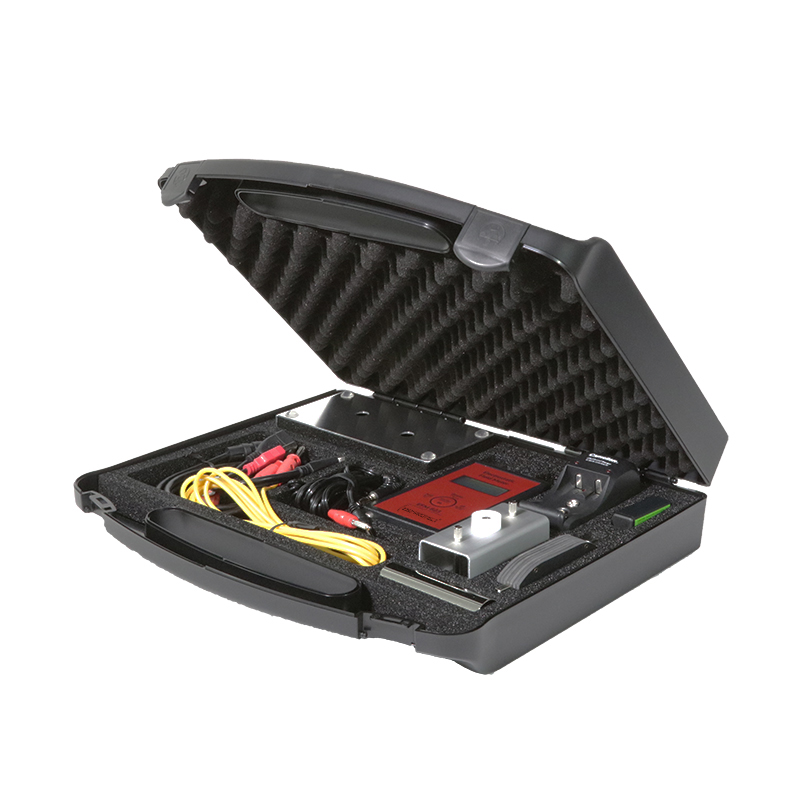 EP0201017
Electric field meter EP-EFM 823 with accessory set BGT
 EP0201117
Electric field meter EP-EFM 825 with accessory set AKC
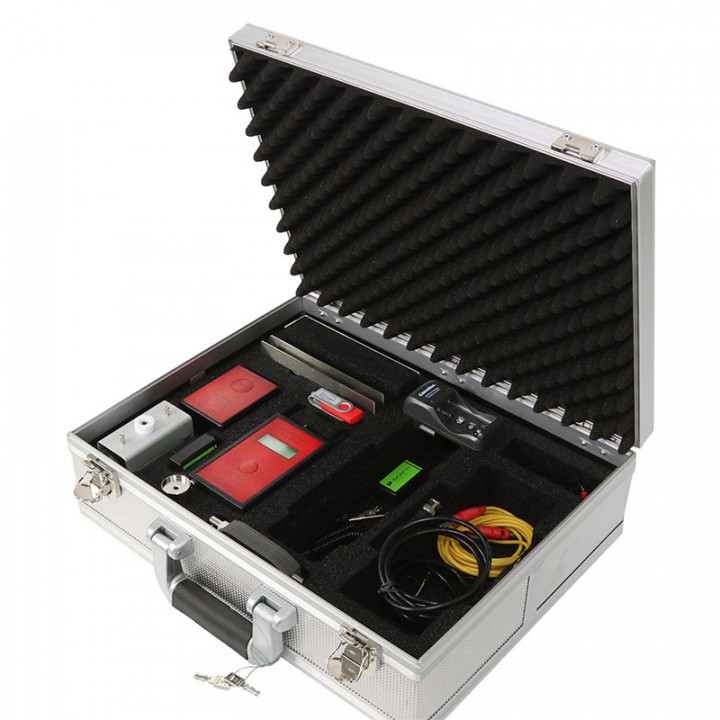 EP0201018
Electric field meter EP-EFM 823 with accessory set AKC
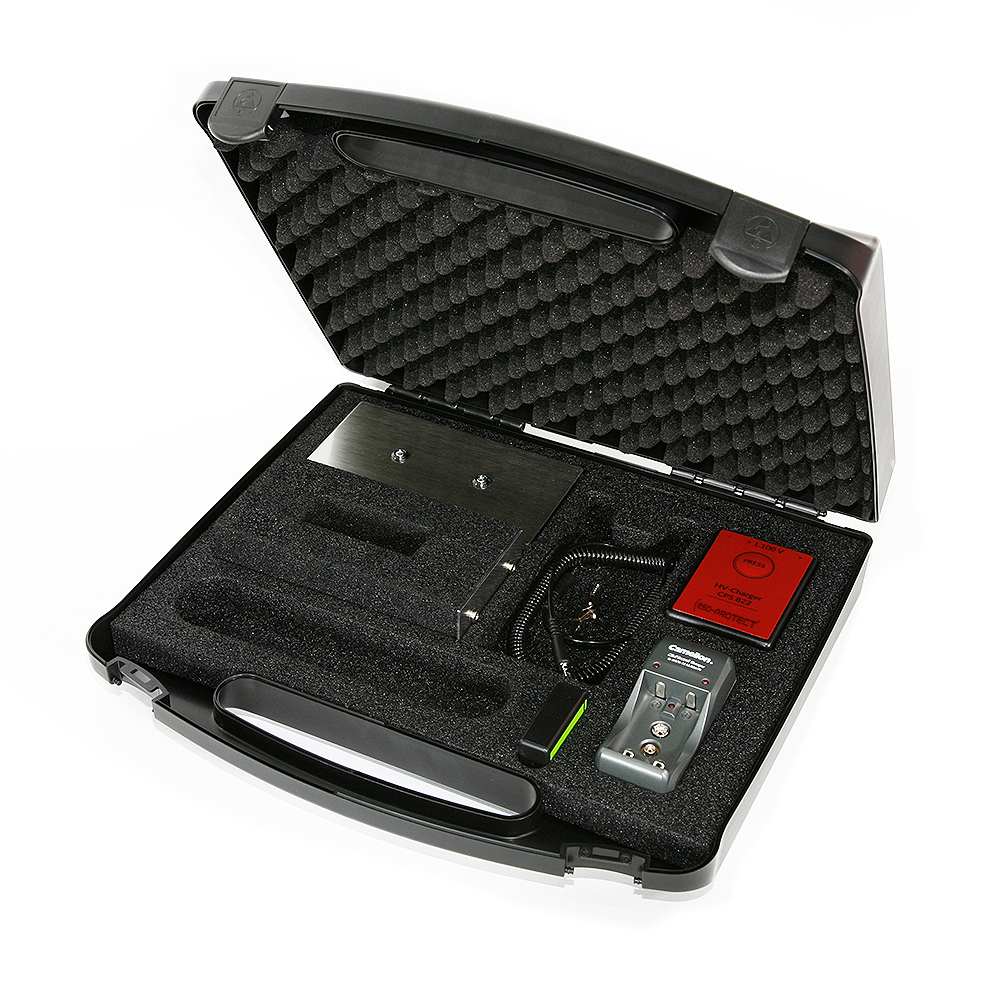 EP0201015
Extension set CPS, Charged Plate for EFM 822/823
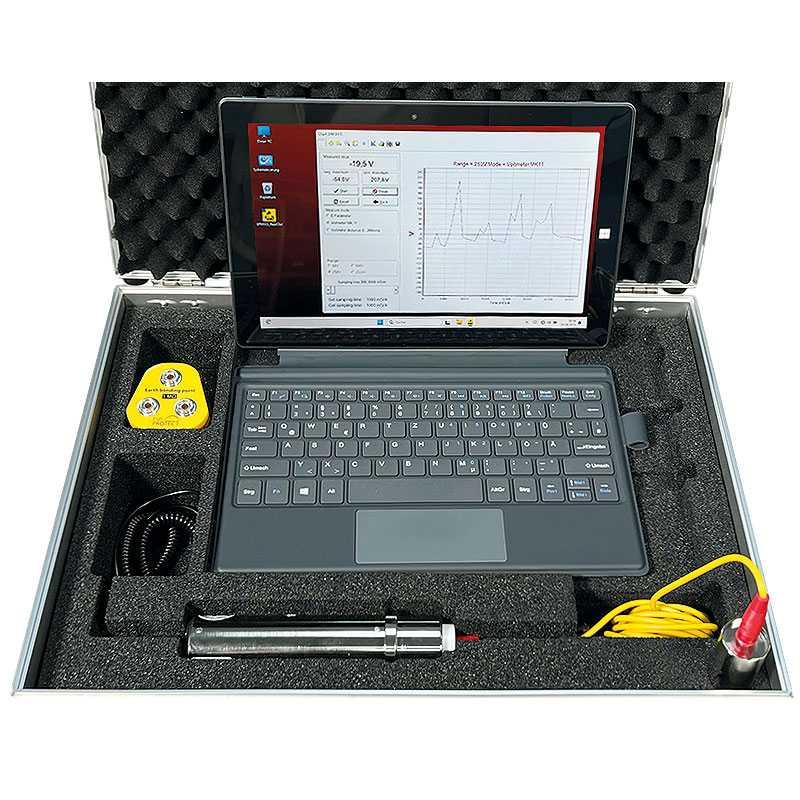 EP0201066
BGT Visio 600 walk-in test/walking test
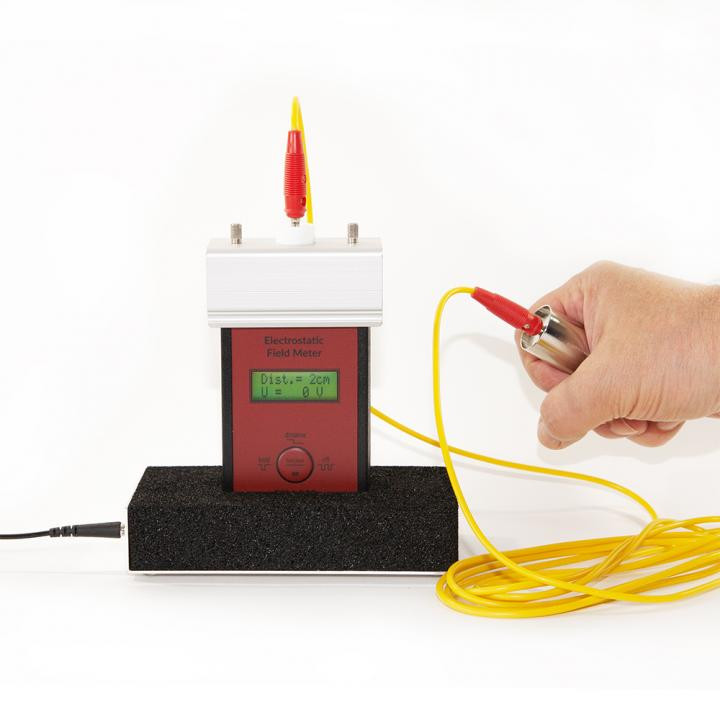 EP0201019
Extension set VMS, walk-on test for EP-EFM 822
 EP0201086
Charged Plate Monitor DESCO 19494
 EP0201134
Digital electric field meter DESCO 19432
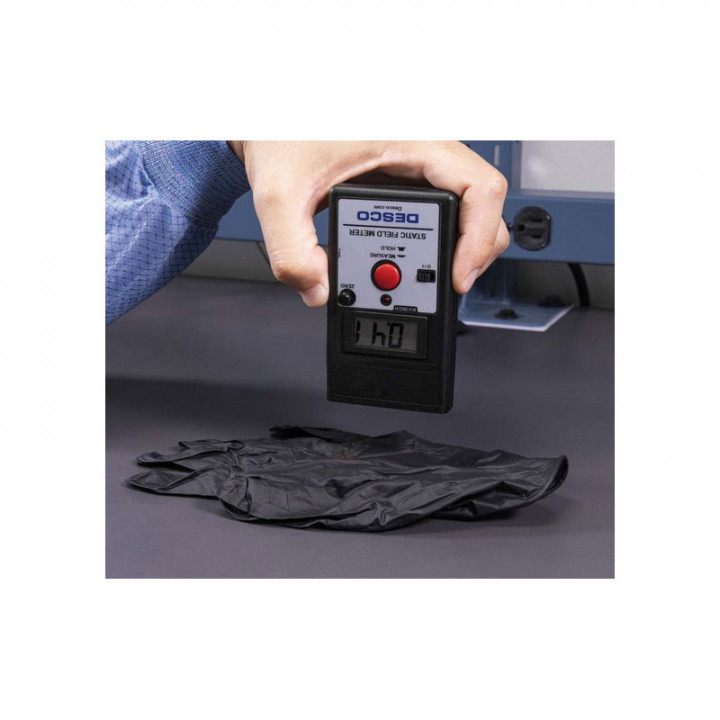 EP0201084
Electric field meter DESCO 19442
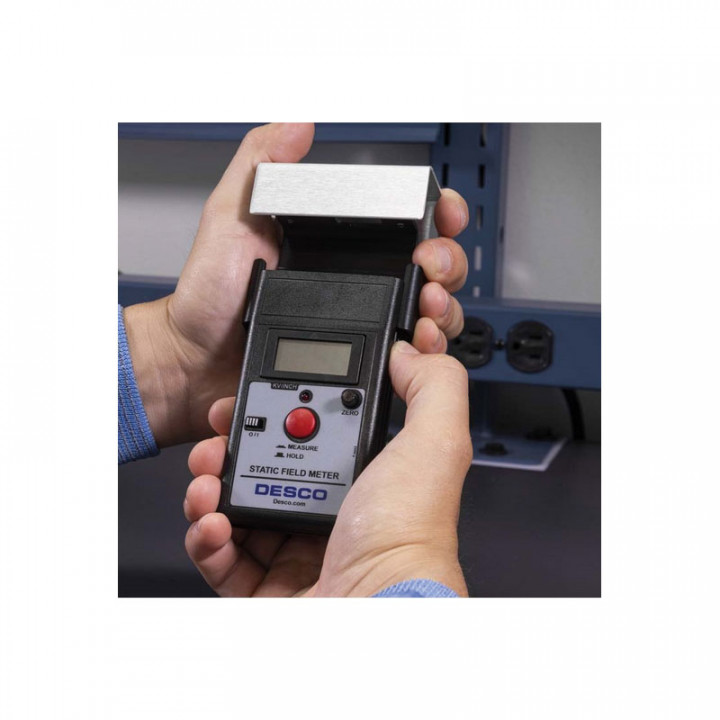 EP0201085
Electric field meter DESCO ionization kit 19443
 EP0201023
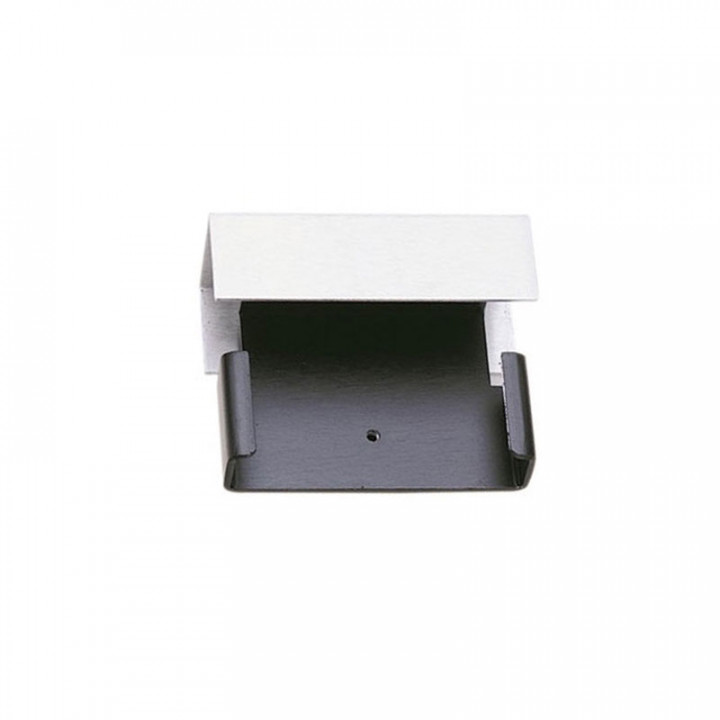
Charged plate for DESCO electric field meter 19441
 EP0201024
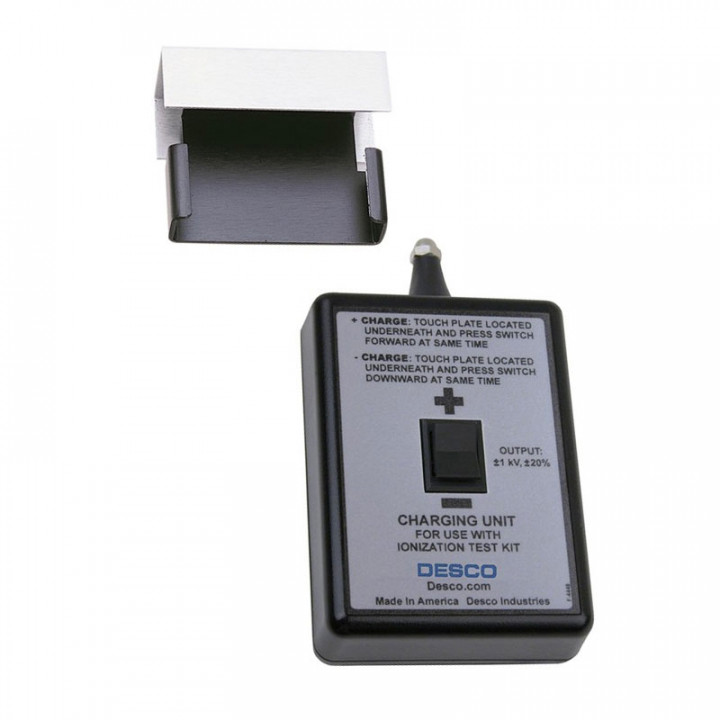
Upgrade kit DESCO 19440 for electric field meter
 EP0201025
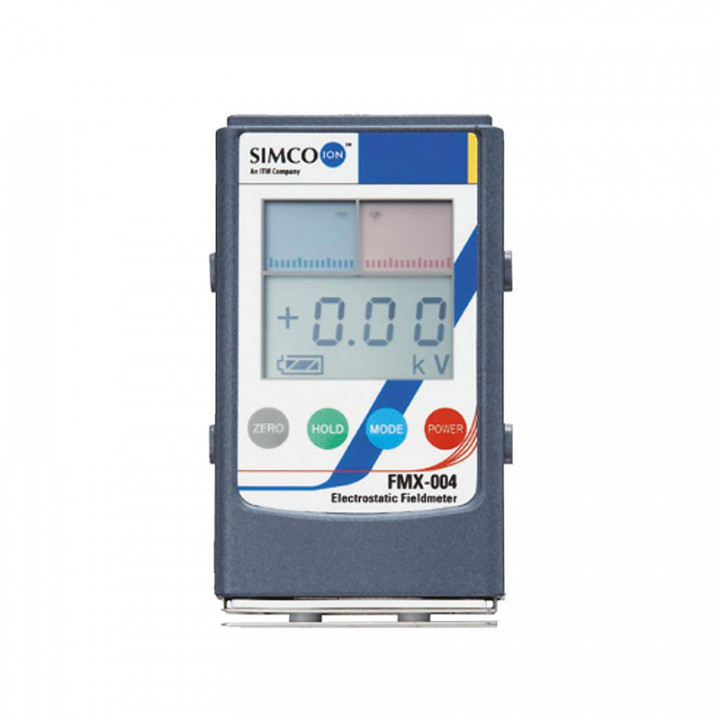
SIMCO FMX 004 electric field meter
 EP0201026
Electric field meter EFM8120
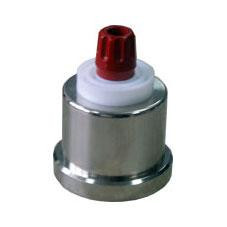 EP0201031
Voltage measuring head for EFM 8120
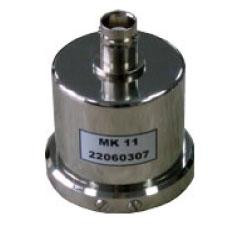 EP0201029
Voltage measuring head BNC for EFM 8120
Electric Field Meter
Measuring Electric Field Strength
The measurement of electric fields and field strength is one of the most important measurements in ESD metrology. An electric field meter should therefore be part of the standard equipment in any EPA. An electric field meter – also referred to as an electrostatic fieldmeter, rotating voltmeter or field mill – is a device for measuring electric field strength. At a defined measurement distance from an object, it can be used as a voltage measuring instrument.
Electric Field Meter – Operating Principle and Measurement Method
Electric field meters measure electric field strength without contact over a defined distance to the measurement surface. The measurement principle is based on detecting the electric field emanating from charged surfaces, materials or components. With a known and constant measurement distance, the surface potential in volts can be derived directly from the measured field strength – without physical contact with the measurement object. This non-contact method makes the electric field meter particularly suitable for measuring sensitive components, insulating surfaces and moving materials in production environments. In technical literature, the device is occasionally also referred to as a field mill – a term derived from the rotating measurement principle of older device generations.
Applications in ESD Metrology
Electric field meters are used in EPA areas for the following measurement tasks:
- Ioniser verification – Measurement of offset voltage and evaluation of neutralisation performance per ANSI/ESD SP3.3.
- Detection of charged materials – Identification of insulating or insufficiently dissipative surfaces in production.
- Packaging inspection – Measurement of electrostatic charges on ESD packaging and transport equipment.
- Workstation analysis – Assessment of electrostatic risks at assembly and test workstations.
- Process monitoring – Continuous monitoring of electrostatic fields in automated production lines.
Electric Field Meter – Selection by Requirement
The choice of the appropriate electric field meter depends on the measurement range, required accuracy and operating environment. Handheld devices are suitable for mobile measurement tasks in the context of EPA audits and routine inspections. Stationary electric field meters are used for permanent process monitoring. For combined measurement tasks – such as the simultaneous recording of field strength and ioniser performance – use within an ESD Audit Kit is recommended. All electric field meters in the ESD-PROTECT range are aligned with the requirements of DIN EN 61340-5-1 and ANSI/ESD S20.20 and can be calibrated in the in-house test laboratory.