
Resistance measurement using a teraohmmeter
For measuring surface, leakage and continuity resistances
Resistance measurement is a key method for verifying ESD protection measures. It is used to check the discharge and continuity resistances of workstations, floors, earthing systems and personal protective equipment, and ensures that electrostatic charges are discharged in a controlled manner.
Must-Have measuring device
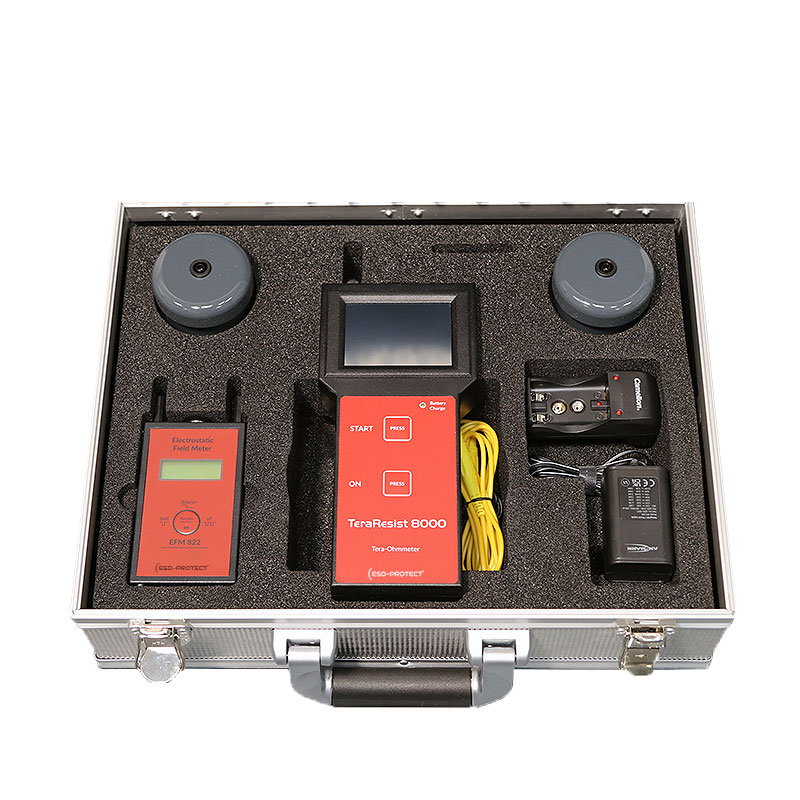
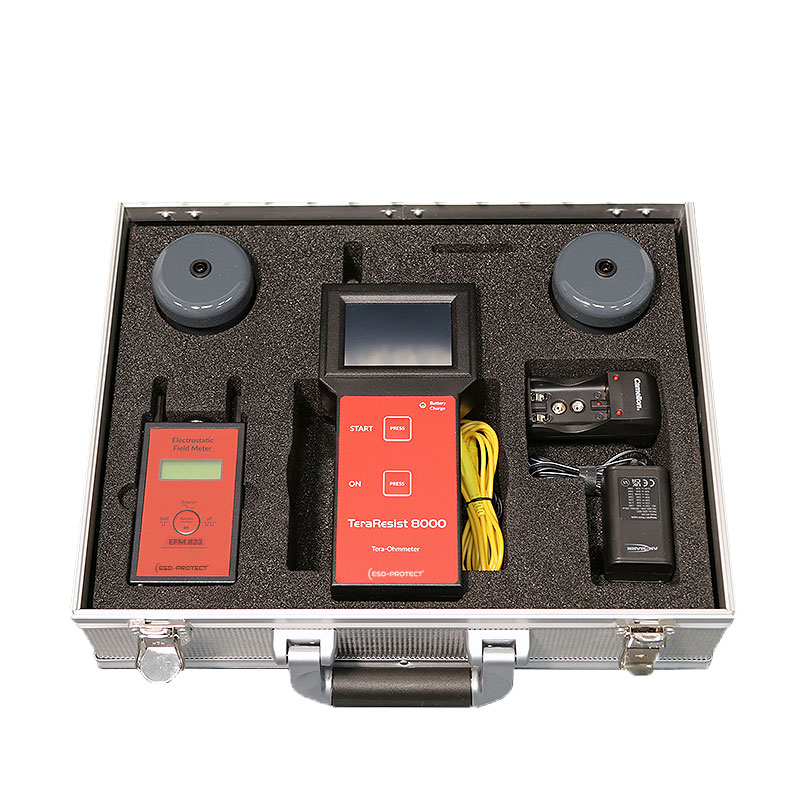
Tera-Ohmmeter TeraResist 8000
- Colour touchscreen display
- 4 test voltages
- 10 V from 1 kΩ to 200 GΩ
- 100 V from 100 kΩ to 2 TΩ
- 500 V from 500 kΩ to 5 TΩ
- 1,000 V from 1 MΩ to 10 TΩ
- Auto-measurement voltage
- 10 V from 1 kΩ (103 ohms) up to 1 MΩ (2 x 10⁵ ohms)
- 100 V from 1 MΩ (2 × 10⁵ ohms) up to 2 kΩ (2 × 10¹² ohms) - Timer function
- Measurement of humidity and temperature
- Breakdown resistance measurement with graphical display
- Internal memory for approx. 100 measurements
- USB interface / software

 EP0201074
 EP0201124
 EP0201003
 EP0201002
 EP0201091
 EP0201090
 EP0201125
 EP0201064
 EP0201063
 EP0201006
 EP0201009
 EP0201065
 EP0201083
 EP0201089
 EP0299031
 EP0204003
 EP0204021
 EP0204014
 EP0204017
 EP0204020
 EP0299057
Content: 2 Stück (€22.85* / 1 Stück)
 EP0204015
 EP0201073
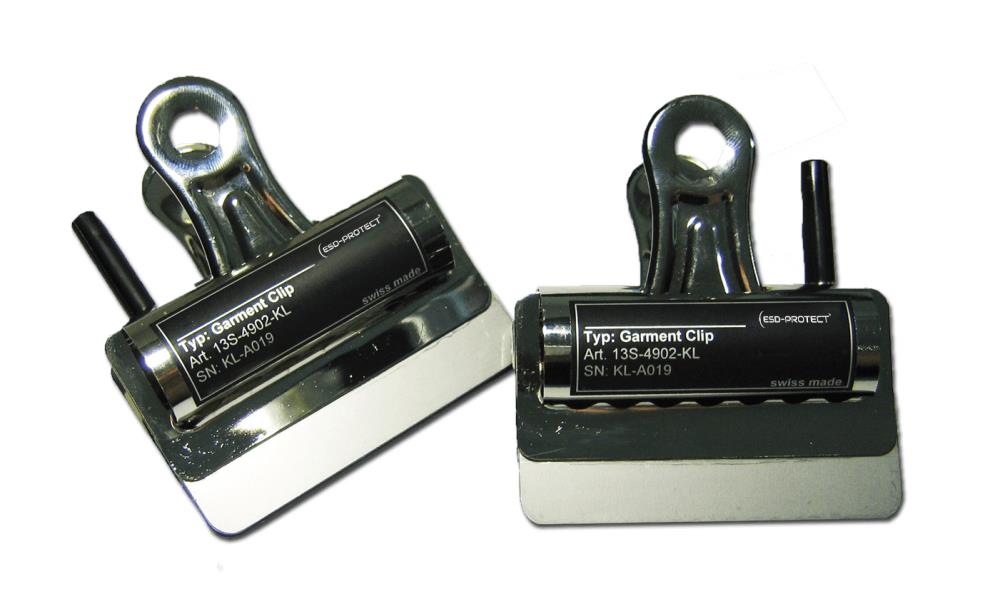 EP0204005
Measuring resistance in the ESD range
Materials are classified into the following categories depending on their electrical resistance: electrically conductive, electrically dissipative and insulating.
In order to avoid electrostatic charges or prevent sudden, violent discharges, materials must be checked regularly for their resistance values, usually surface resistance.
Therefore, resistance measurements, along with field strength measurements, are among the most important measurement methods in the ESD sector.
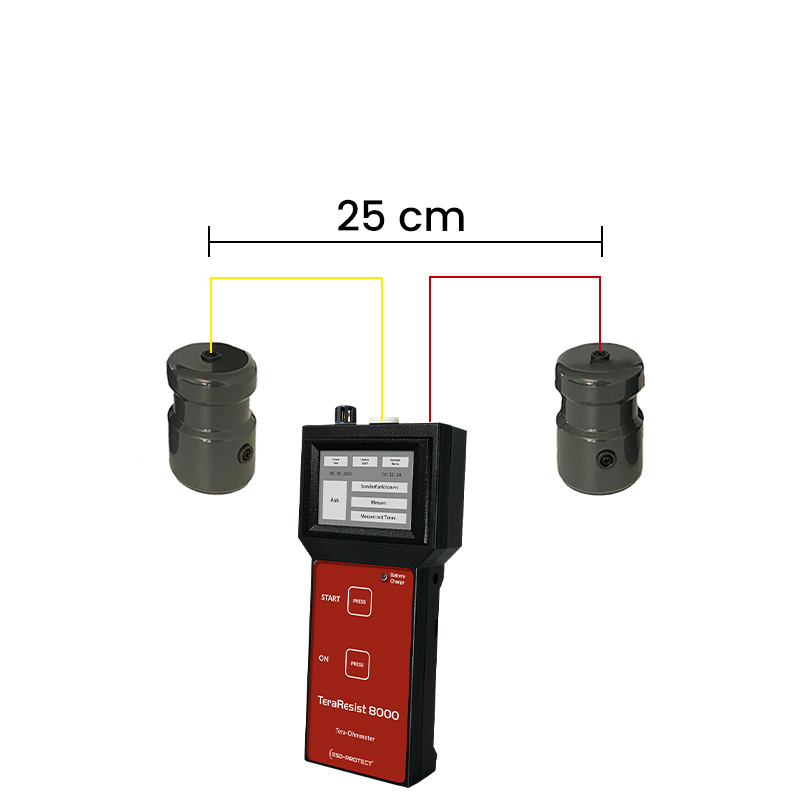
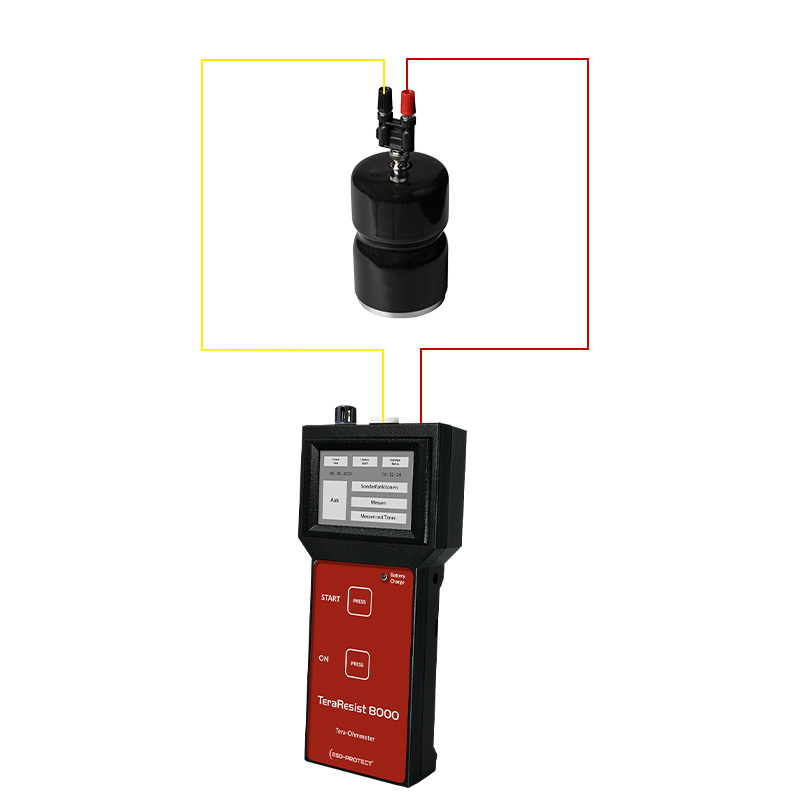
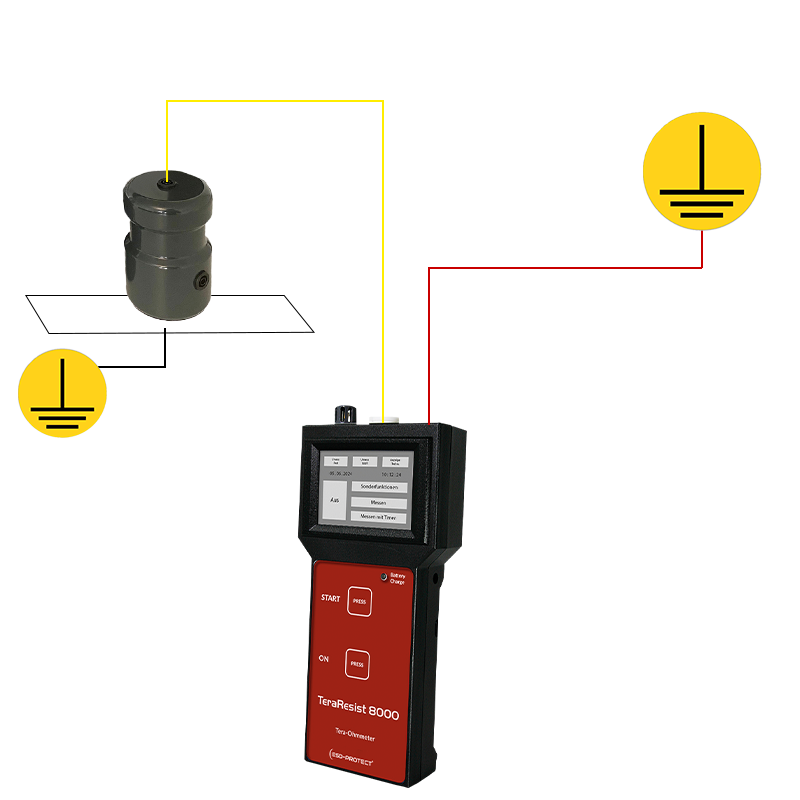

Point-to-point measurement with 2 electrodes
For measuring the surface resistance between 2 points. (Rp-p)
Point-to-point measurement with ring electrode
For measuring the surface resistance at a single point. (Rs)
Point-to-ground measurement with an electrode
For measuring the leakage resistance. (Rg)
Volume resistance measurement
For measuring volume resistance with a counter electrode. (Rv)